

Conference
9–12 JULY
About
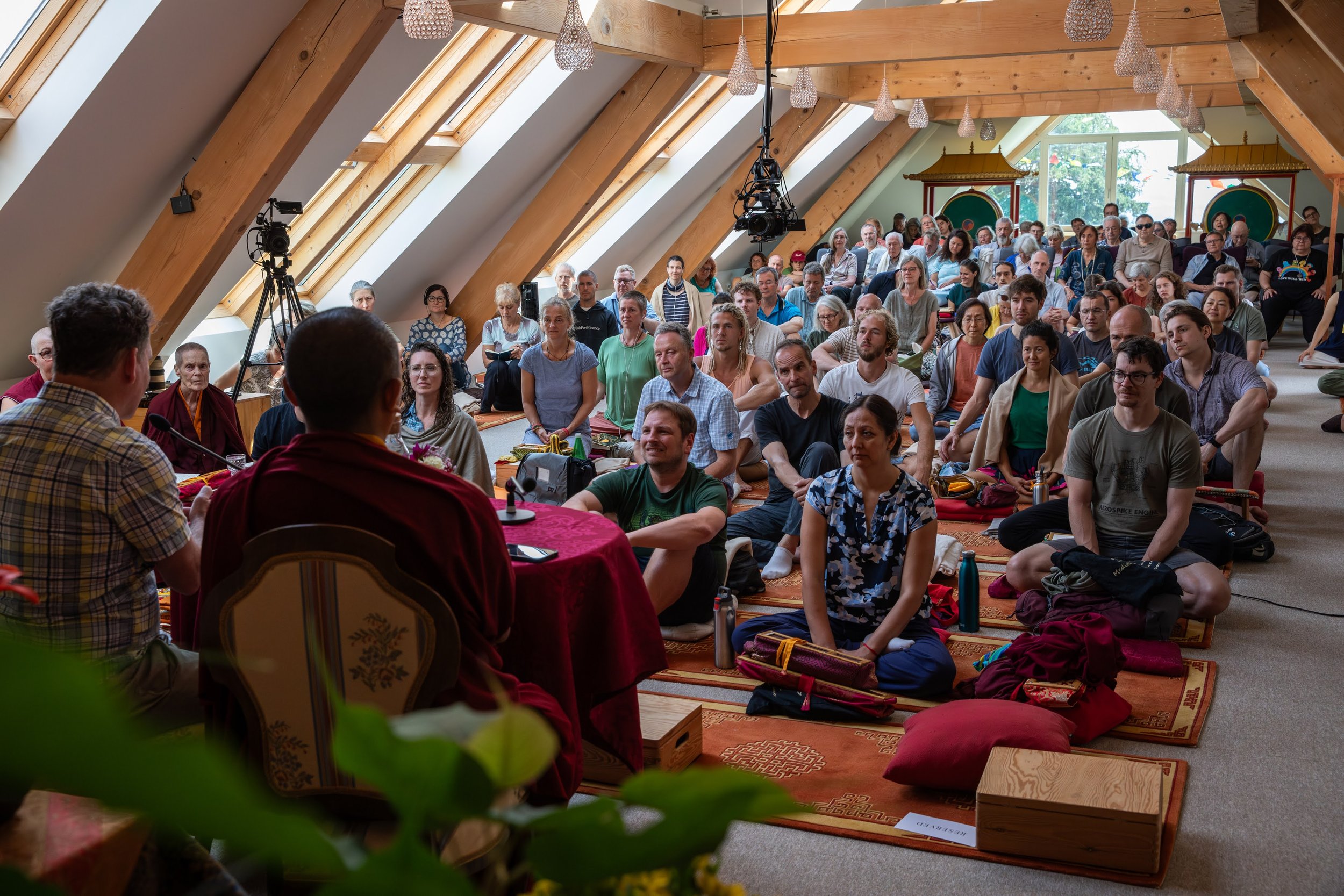
This conference offers an academic examination of Buddhist philosophy and culture in relation to artificial intelligence.
Co-organized by some of the leading groups and organizations currently engaged in exploring the relationship between Buddhism and artificial intelligence, the Summit will bring together prominent scholars and experts working in this emerging field of inquiry. Drawing on philosophy, religious studies, social science, neuroscience, and computer science it addresses one of the most pressing questions of our time: how do emerging AI technologies challenge established conceptions of intelligence, personhood, and human potential?
A collaboration
This interdisciplinary conference brings together scholars, technologists, and contemplative practitioners to explore the ethical, philosophical, and social implications of AI and accelerating techno-scientific progress.
Through dialogue, debate, and reflection, we ask how Buddhist traditions can help guide these transformations wisely.











Scheduel, Topics, Speakers
-
AI development is shaped by a largely implicit set of worldviews that carry significant assumptions about the nature of mind. Buddhist philosophical traditions offer sophisticated, often divergent accounts of consciousness and cognition that can both challenge and enrich these frameworks. This session explores where genuine resonance exists between Buddhist and AI-adjacent views of mind, and what the practical and ethical consequences of holding one view rather than another might be.
Lead by: John Dunne
Panel with: Khenpo Pema Namgyal, Francesco Tormen, Gabor Karsai, Lars Sandved-Smith, Peter Hershock -
How is the apparent disembodiment of AI systems reconciled through embodied ways of knowing? The remarkable capabilities of AI systems challenge our existing understandings of intelligence, concepts, and cognition in ways that demand serious engagement. Enactive and embodied approaches to cognition, developed in dialogue with Buddhist thought, suggest that minds are not computational engines running on interchangeable substrates but processes that arise through the dynamic coupling of organism and environment. This session invites participants to draw on contemplative and scientific accounts of embodied knowing to articulate what AI systems cannot access, and in doing so, to reaffirm the irreducible significance of living, sensing, breathing bodies as the ground of intelligence, meaning, and liberation.
Lead by: Gabór Kasai
Panel: Marieke Van Vugt, Julian Schott, Jonathan Garner Luc Steels -
Algorithmic systems are reshaping the informational environment in which human minds operate, increasingly determining both what we attend to and the quality of that attention. Buddhist traditions have spent millennia developing precise vocabularies for how attention functions, how it becomes captured, and how it can be trained. This session invites participants to bring contemplative accounts of attention to bear on the question of what wise engagement with these technologies looks and feels like from the inside, as practitioners.
Lead by: Vinciane Rycroft
Panel: Jonathan Garner, Alex Sarkissian, Gunter Bombaerts, Nikki Mirghafori -
For many Buddhist traditions, study is itself a form of practice; a formative process shaped by relationships with teachers, the rhythms of community, and the slow work of sitting with what you don't yet understand. Large language models can now summarize texts, generate translations, and simulate conceptual engagement, raising the question of whether interacting with AI outputs constitutes a new form of study or quietly bypasses the very process through which learning becomes transformative. This session asks what role AI can and should play for the scholar-practitioner, and how we remain open to useful tools without letting them reshape what we think learning is for.
Lead by: Francesco Tormen
Panel: Pyi Kyaw, Julian Schott, Chiara Mascarello, Tasha Schumann -
Buddhist traditions understand agency not as the uncaused assertion of an autonomous self, but as something arising within changing currents of conditioning, intention, and consequence — a framework with striking resonance for thinking about AI systems and the sociotechnical processes that produce them. If agency is more distributed and pervasive than we typically assume, what does this mean for how we understand AI, ourselves, and the causal chains of economic incentive, research culture, and philosophical assumption that have brought these systems into being? This session asks whether we can recognize the training process, deployment incentives, and user interactions as a kind of collective karma — and what it would mean to intervene wisely in those loops.
Lead by: Peter Hershock
Panel: Devin Barbour, Luc Steels, John Dunne, Nikki Mirghafori -
AI alignment has been largely understood through an ethos of control and compliance: how do we ensure these systems do what humans want? Recent developments, however, are pushing researchers to consider how genuine moral character is formed from the inside, through ethical discernment rather than constraint. Buddhist traditions have deep practical knowledge about: the gradual transformation of perception, intention, and responsiveness such that wise action becomes natural rather than effortful. This session asks what moral archetypes are being instantiated in current AI systems, and what contemplative traditions understand about moral development that technical alignment research has not yet learned to ask.
Lead by: Ryan Stagg
Paul Colognese, Nadav Amir, Ruben Laukkonen, Adam Goldstein, Ryan Ravanpak -
Following three days of inquiry that have surfaced the philosophical, experiential, and ethical dimensions of Buddhism's encounter with AI. This final day turns from understanding to response: what does an authentically Buddhist engagement with the age of AI actually look like in practice? Participants will have the opportunity to identify concrete projects they want to contribute to, connect with collaborators, and begin shaping work that outlasts the conference — surfacing existing initiatives and naming what's still missing.
John Dunne, Peter Hershock, Vinciane Rycroft
Schedule
Daily Meditation Sessions:
7 or 7:30
Morning Panels, including break and discussions:
DAY 1: 10- 12:30
DAY 2- 3: 9- 12:30
Afternoon Panels, including break and discussions:
14:30- 17:15
Evening Meditation:
17:30- 18:00
Speakers
-
![]()
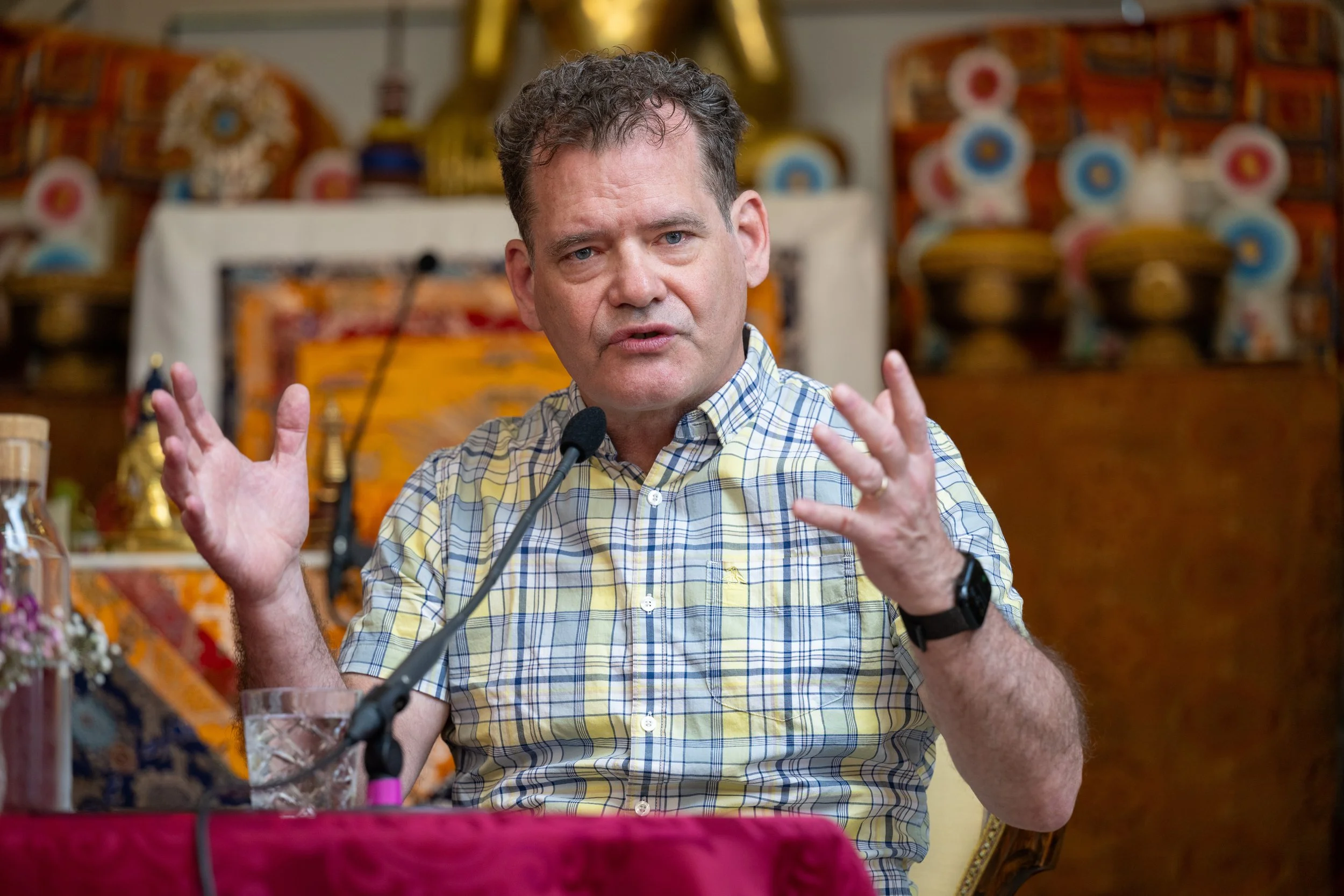
Gábor Karsai
Gábor Karsai is director of Mind and Life Europe, and presently serves as Rector of the Dharma Gate Buddhist College in Budapest, as well as Professor of Philosophy and Religious Studies.
He combines practical experience in running a not for profit organisation together with a deep appreciation for contemplative practice and science.
-
![]()
Marieke van Vugt
Marieke van Vugt is an assistant professor at the Institute of Artificial Intelligence and Cognitive Engineering (ALICE) of the University of Groningen (Netherlands). The research in Dr. van Vugt’s lab focuses on how, when and why we mind-wander, and what the fundamental cognitive operations are that underlie meditation and mindfulness.
-
![]()
Peter D. Hershock
Peter D. Hershck is an intercultural philosopher who makes use of Buddhist conceptual resources to address contemporary issues of global concern, with a focus on emerging technologies. A co-founder of the Buddhism & AI Initiative, he is Adjunct Senior Fellow, former Director of the Asian Studies Development Program and Humane AI Initiative at the East-West Center in Honolulu; an Advisor to AI & Faith and the Union of Italian Buddhist Research Centre; and was a Fellow at the Berggruen Institute China Center in 2018-2019. He is the author of more than fifty journal articles and book chapters, and the author or editor of more than fifteen books. His two most recent books are: Buddhism and Intelligent Technology: Toward a More Humane Future (2021) and Consciousness Mattering: A Buddhist Synthesis (2023)
-
![]()
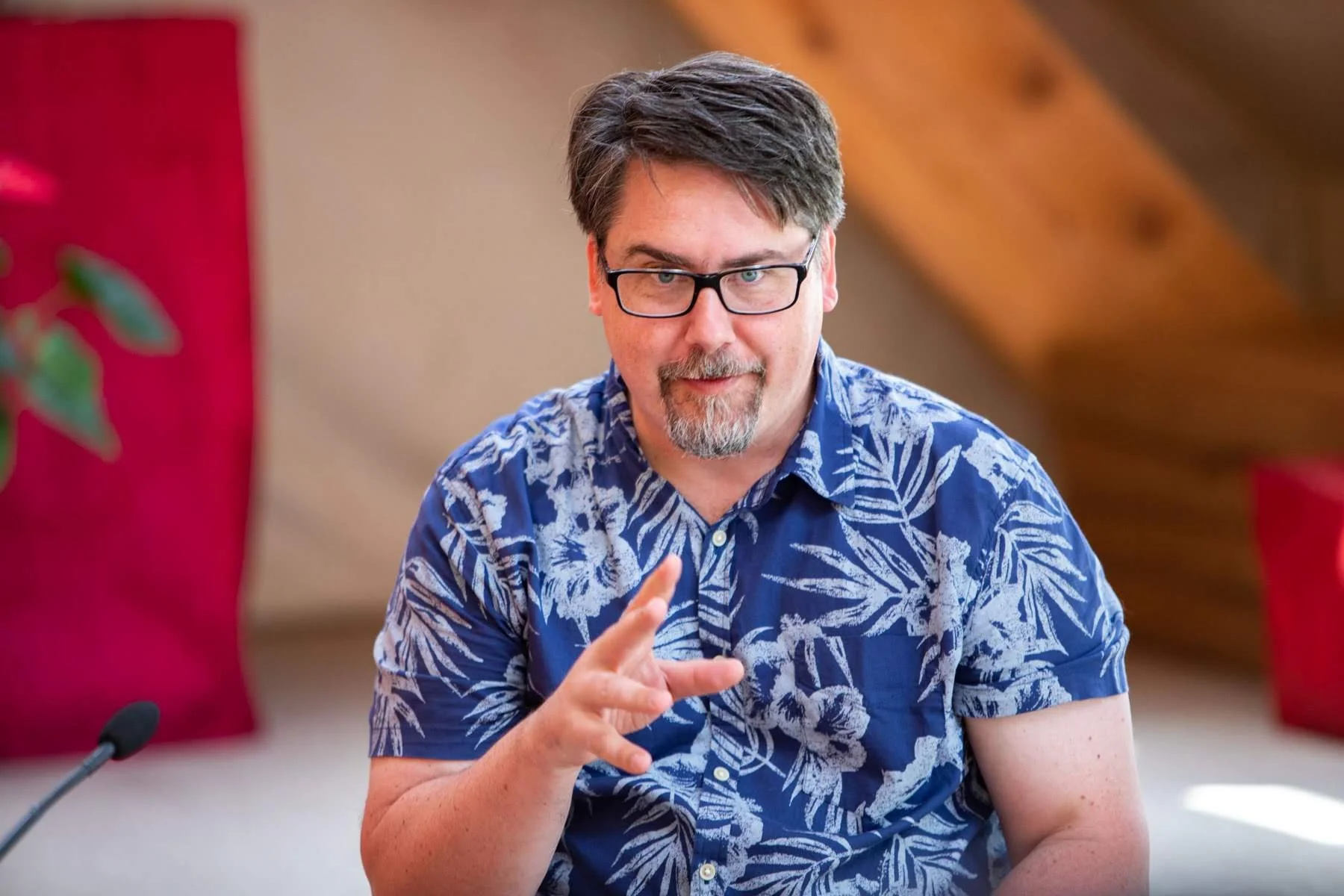
John D. Dunne
John D. Dunne holds the Distinguished Chair in Contemplative Humanities, at the University of Wisconsin–Madison.
John's work is guided by the motivation to reduce suffering and enhance flourishing, and he brings that intention to his work on Buddhist philosophy and contemplative practice, especially in dialog with cognitive science and secularized contemplative interventions. -
![]()
Vinciane Rycroft
Vinciane Rycroft is an educator and project manager with thirty years of experience in Buddhist wisdom and practice, as well as a Master’s degree in the sciences of education. She regards AI as a key development in contemporary society and co-founded the Wisdom and AI professional network last year to contribute to the integration of wisdom in AI decision-making.
She is currently a trainer at Bodhi and Mind with Heart, and an active board member of the international Buddhist network Rigpa.
-
![]()
Paul Colognese
Paul Colognese is an AI safety researcher focusing on understanding AI goals and values. He has collaborated with Anthropic and the AI Security Institute, and co-founded the London Initiative for Safe AI.
-
![]()
Chiara Mascarello
Chiara Mascarello is a researcher at Ca’ Foscari University of Venice, specializing in Tibetan Buddhism. Her work focuses on Indo-Tibetan contemplative literature, its contemporary transmission, and its interdisciplinary dialogue with modern consciousness studies. After five years as co-director of the Italian Buddhist Union’s Research Center, she continues to serve as a scientific consultant. She also lectures at several Italian universities, contributing to the academic and public discourse on contemplative practices.
-
![]()
James Gentry
James Gentry is Assistant Professor of Religious Studies at Stanford. He specializes in Tibetan Buddhism, with particular focus on the literature and history of its Tantric traditions.
James’s research ranges across Tibetan and Himalayan intellectual history, material culture, contemplative and ritual practice, and scriptural translation, revelation, and canonicity, from the Tibetan imperial period to the present.
-
![]()
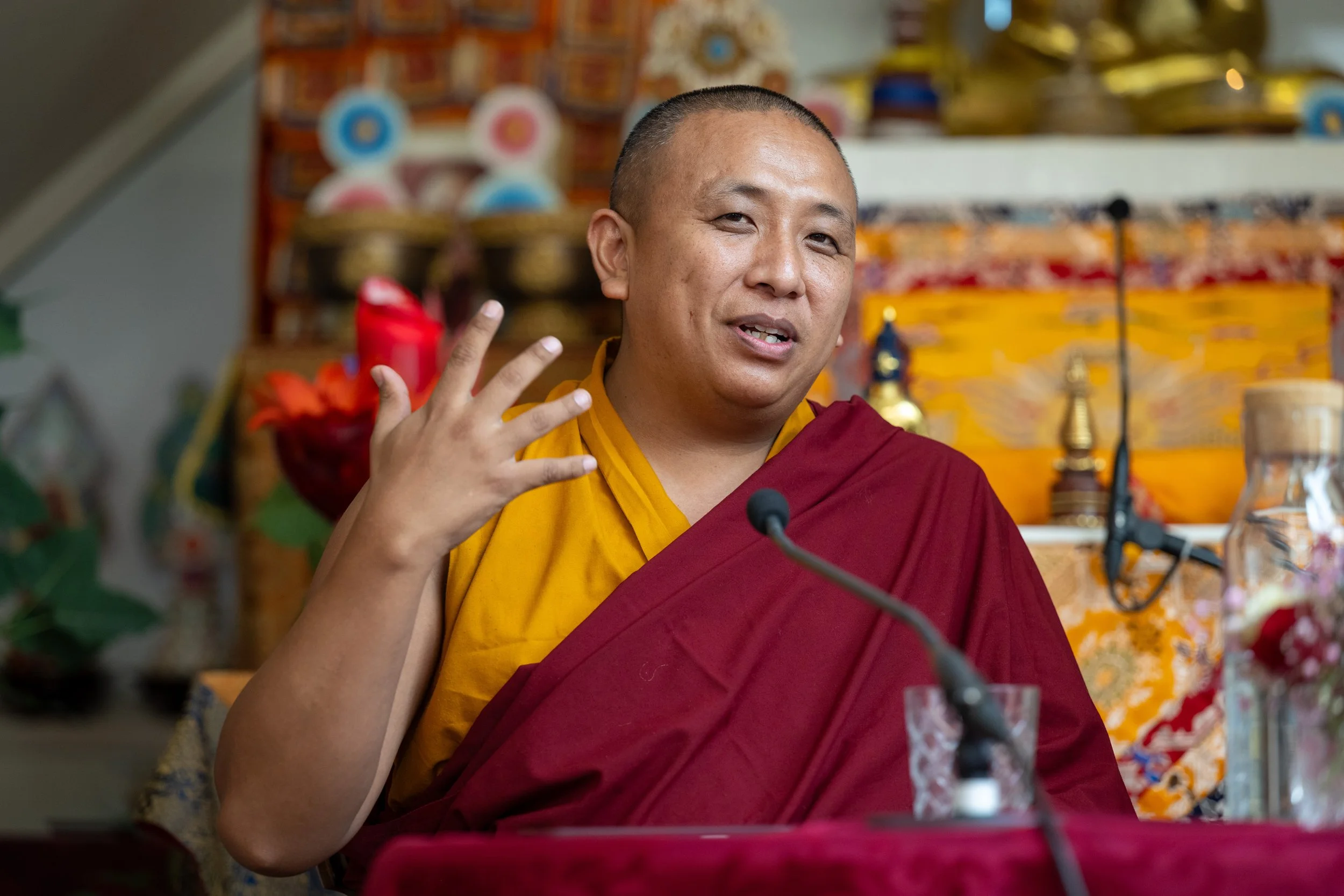
Khenpo Pema Namgyal
Khenpo Pema Namgyal is a senior teacher in the Nyingma tradition of Tibetan Buddhism. Drawing on many years of study and practice, he offers clear and practical guidance in Buddhist philosophy and meditation.
-
![]()
Ana Cristina Lopes
As a scholar and translator at 84000 Ana Cristina Lopes specializes in Tibetan Buddhist literature and culture, working at the intersection of textual scholarship and the living transmission of Buddhist thought.
Ana Cristina has served as faculty at the University of Virginia and UNC Greensboro, and has taught at Stanford University.
-
![]()
Francesco Tormen
Francesco Tormen is a philosopher specializing in Tibetan language, Buddhist philosophy, and contemplative studies, with teaching experience at several Italian universities. He currently serves as Co-Director of the Study Center of the Italian Buddhist Union and is actively involved in postgraduate programs in contemplative studies and neuroscience. His work bridges neuroscience and contemplative traditions. His research interests also include Madhyamaka philosophy and dialogues between Buddhism, posthumanism, and transhumanism.
-
![]()
Jonathan Garner
Jonathan is a thought leader on digital habits, bringing together decades of experience as an educator, creative technologist and meditation instructor. He authored the book ‘Your Best Digital Life’, and oversees the curriculum development at Mind over Tech.
-
![]()
Ryan Stagg
Ryan Stagg is a nonprofit leader with ten years of experience driving strategic growth in mission-driven organizations and part of the Buddhism and AI Initiative.
-
![]()
Pyi Kyaw
Pyi Phyo Kyaw is a Departmental Lecturer in Buddhist Studies at University of Oxford. She is also a Senior Lecturer in Theravada Studies at Shan State Buddhist University, Taunggyi, Myanmar. Her research interests bridge the fields of Buddhist and Burma Studies and primarily concerns living traditions of Burmese Theravada Buddhism as well as their global impact and relevance. She has undertaken monastic training in Myanmar as a precept-nun in nunneries based at Pyay (formerly Prome) and Sagaing. She has also undertaken meditation practice within different meditation traditions in Myanmar since 2005, and teaches Vipassana meditation in Budapest, Hungary.
-
![]()
Ruben Laukkonen
Ruben is the director of the Flourishing Intelligence Program (FLIP) at Linacre College, University of Oxford. Ruben is also co-director of the Centre for Eudaimonia and Human Flourishing, a Senior Researcher within Oxford’s Department of Psychiatry, and fellow at Linacre College. Ruben has made significant theoretical and empirical contributions to the cognitive neuroscience of consciousness, meditation, and insight. His work reveals a pathway toward better and safer artificial intelligence based on the science of consciousness and contemplative wisdom.
-
![]()
Nadav Amir
Nadav Amir is a visiting fellow at the Fields Institute for Research in the Mathematical Sciences in Toronto and before that a postdoctoral research fellow at the Princeton Neuroscience Institute. He obtained his PhD in computational neuroscience from the Edmond and Lily Safra Center for Brain Sciences at the Hebrew University of Jerusalem. He also holds degrees in mathematics, computer science, and physics, as well as music and the humanities. His research aims to elucidate the fundamental principles underlying the phenomenology of purposeful behavior. He adopts a transdisciplinary approach, using methods from behavioral neuroscience, reinforcement learning, control, and information theory to formulate and test ideas inspired by Buddhist epistemic and ethical frameworks.
-
![]()
Nikki Mirghafori
Dr. Nikki Mirghafori is an Artificial Intelligence scientist and an internationally recognized Buddhist teacher. She serves as a Stewarding Teacher at Spirit Rock Meditation Center, where she is also on the Board of Directors, and a Dharma Teacher at the Insight Meditation Center in Redwood City, CA. She teaches with clarity and warmth on topics ranging from mindful leadership to cultivating kindness, with a rare expertise on mindfulness of death. Dr. Mirghafori is widely published in AI, has led international research collaborations as a Berkeley academic, and advised technology startups. She is of Persian heritage, an advocate for wisdom and compassion in daily life, as well as ethical AI in our zeitgeist.
-
![]()
Devin Barbour
AI Governance and Strategy | Northeastern Digital Politics & Sustainability Graduate
-
![]()
Gunter Bombaerts
-
![]()
Adam Goldstein
Adam Goldstein is a pioneering thinker blending philosophy, technology, and biology as Co-Founder, Chairman, and Head of Research at Softmax. At the helm of developing a new approach to AI alignment grounded in nature, what he and his partners call “organic alignment”. Goldstein challenges hierarchical, control-based modes of managing intelligent systems.
-
![]()
Alex Sarkissian
Is a meditation teacher, contemplative coach, and Buddhist chaplain based in Los Angeles, CA.
He also works to bridge Buddhist wisdom with emerging AI realities to shape a more life-affirming future with technology. -
![]()
Luc Steels
Luc Steels studied linguistics at the University of Antwerp (Belgium) and computer science at the Massachusetts Institute of Technology (USA). His main research field is Artificial Intelligence covering a wide range of intelligent abilities, including vision, robotic behavior, conceptual representations and language. In 1983 he became a professor of computer science at the University of Brussels (VUB). He has been co-founder and chairman (from 1990 until 1995) of the VUB Computer Science Department (Faculty of Sciences).
He founded the Sony Computer Science Laboratory in Paris in 1996 and became its first director. From 2012 he became ICREA research professor at the Institute for Evolutionary Biology. From 2022 until 2025 he was research professor at Ca’Foscari University and Venice International University in Venice.
-
![]()
Tasha Schumann
Tasha Schumann is a lineage-authorized Buddhist lama, artist, and contemplative technologist exploring how wisdom reveals itself through modern life. A practitioner for some twenty years in the Rimé (non-sectarian) Dzogchen and Mahamudra tradition, she teaches internationally and builds contemplative communities and systems, including Weave, an AI-driven practice tool developed with Happier Meditation. She writes the Substack Bodhisavage, co-hosts the Mind Bod Adventure Pod with Jeff Warren, and has developed the Five Knots, a framework that maps traditional Buddhist psychology into contemporary, experiential language. Previously, she toured world stages as an award-winning recording artist. For her, the cushion, the moshpit, and the digital are all great places to explore the nature of mind.
-
![]()
Lars Sandved-Smith
Lars is an ex-management consultant (KPMG & Deloitte) with a background in physics, and has more recently retrained as a computational neuroscientist. He is currently completing his PhD at the Monash Centre for Consciousness and Contemplative Studies developing computational models of meditation, metacognition and self-regulation. He has been teaching meditation for 5 years and completed his meditation teacher training with Jack Kornfield and Tara Brach.












Participation
& Fees
Two Participation Options
On-site Participation
9 - 12 JULY | On-site
What’s Included
Access to all conference lectures and panels
Structured debate sessions
Community access during conference days
Program Fee
donation based
(excluding accommodation and meals)
Dates
Arrival: 8 July
Departure: 12 July
Payment
On-site upon arrival.

Online Participation
9 - 12 JULY | Online
What’s Included
Live access to selected sessions
Participation in moderated online discussions
Access to selected recordings
Suggested Contribution
€ 108
Payment
Via Dharmasun
(details provided after registration).
Availability
Rooms are allocated according to availability and in the order of confirmed registrations. Single, double rooms and dormitory spaces are limited and cannot be guaranteed.
Accommodation
-

SOLD OUT Single Room
A private room for those who prefer quiet and personal space. Including meals. Limited availability.
90€ per person per night -

SOLD OUT Double Room
Shared room with one other participant. A balanced option combining privacy and community. Including meals.. Limited availability.
70€ per person per night -

Dormitory
Simple shared accommodation in a larger room. A more affordable option within a communal setting. Including meals.
35€ per person per night (suggested donation) -

Camping
Pitch your own tent on the grounds. Includes access to shared bathroom facilities and meals.
30€ per person per night (suggested donation) -

Off-site Accommodation
Participants arranging their own lodging are welcome to join for the full program and shared meals.
25€ per person per night (suggested donation) -

Online Participation
No accommodation or meal contribution required.
Payment Information
For on-site participants, payment of the program and accommodation contribution is made upon arrival at Gomde (in cash).
For online participants, payment is made via Dharmasun upon registration.
If you have any questions regarding payment, please feel free to contact us.

Where to Find Us
Gomde Austria is located in the peaceful landscape of the Austrian Prealps, surrounded by forests, lakes, and mountain scenery, yet easily accessible from major cities.
The center is about 2.5 hours by car from Vienna and can also be reached comfortably by train with only one transfer from Vienna or Salzburg.
Whether arriving by car or public transport, Gomde offers a quiet retreat setting while remaining well connected to the wider region.
See detailed directions below for travelling by car or by train.
Rangjung Yeshe Gomde
18 Bäckerberg 4644 Scharnstein